



264.68.111.161 IP Address Explained: Validity, Risks, and Technical Meaning
IP addresses often appear in unexpected places—server logs, analytics dashboards, firewall alerts, or error messages. When users notice an unfamiliar address like 264.68.111.161, it naturally raises questions about its origin, legitimacy, and potential risk. Because IP addresses are closely associated with internet security and network activity, even a single unknown entry can cause concern.
From a technical networking perspective, every IP address follows defined rules set by the Internet Protocol. However, not all number combinations that look like IP addresses are actually valid. This is where confusion begins, especially for website owners, IT professionals, and non-technical users trying to interpret system data accurately.
This guide focuses on explaining 264.68.111.161 in clear, simple language. It covers how IP addresses work, whether this address is valid, why it may appear in systems, and what actions—if any—users should take. The content aligns with current SEO best practices and user intent, providing both clarity and practical value.
What Is an IP Address and How Does It Work?
An IP address, short for Internet Protocol address, is a unique numerical identifier assigned to devices connected to a network. It allows computers, servers, and mobile devices to communicate with each other across the internet or within local networks. Without IP addresses, data would not know where to go or where it came from.
IP addresses serve several essential purposes:
Identifying devices on a network
Routing data packets correctly
Supporting website access and online services
Enabling security monitoring and access control
Most modern networks still rely heavily on IPv4 addresses, which use a four-number dotted format. Each number represents a specific portion of the address. Understanding this structure is critical when analyzing unusual entries like 264.68.111.161, as it helps determine whether the address follows internet standards or signals a technical anomaly.
How Are IPv4 Addresses Structured?
IPv4 addresses consist of four numerical segments separated by dots. These segments are known as octets, and each octet represents an 8-bit binary value. Because of this binary limitation, the value of each octet must fall within a specific range.
Key structural rules of IPv4 addresses include:
Four octets separated by periods
Each octet ranges from 0 to 255
Total of approximately 4.3 billion possible addresses
Examples of valid IPv4 addresses include:
8.8.8.8
192.168.0.1
172.16.254.3
When an address exceeds this defined range, it becomes invalid. This technical rule plays a crucial role in understanding whether 264.68.111.161 can function as a real internet address or not.
 Is 264.68.111.161 a Valid IP Address?
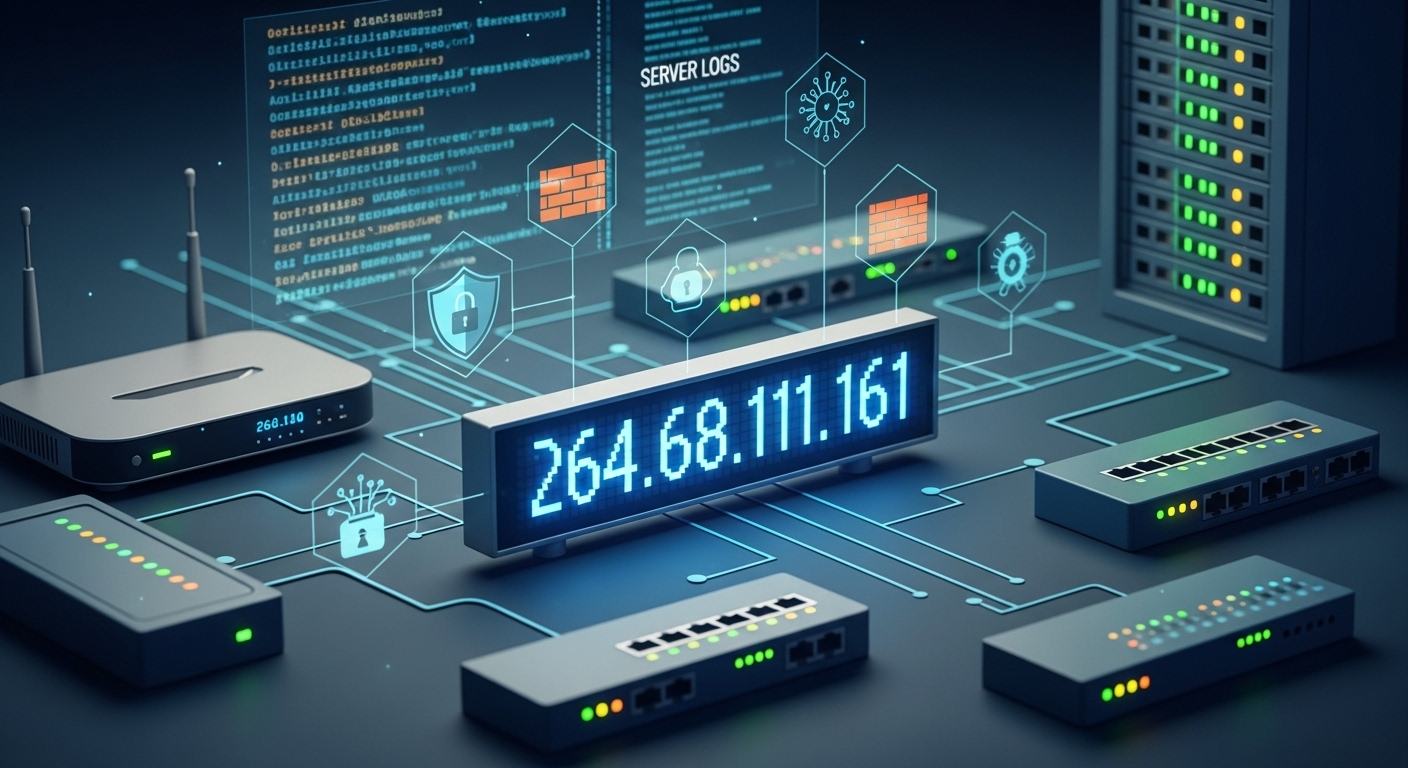 Is 264.68.111.161 a Valid IP Address?
From a technical standpoint, 264.68.111.161 is not a valid IPv4 address. The reason lies in the first octet, “264,” which exceeds the maximum allowable value of 255. Since IPv4 addressing is based on 8-bit binary numbers, any value higher than 255 cannot be processed or routed.
Because of this limitation:
The address cannot be assigned to a device
It cannot exist on public or private networks
No ISP or organization owns this address
Although 264.68.111.161 visually resembles a legitimate IP address, it does not conform to IPv4 standards. Recognizing this distinction is essential for accurate troubleshooting, cybersecurity analysis, and system monitoring. It also prevents users from misinterpreting harmless data as a real security issue.
Why Do Users Encounter the IP Address 264.68.111.161?
Despite being invalid, 264.68.111.161 can still appear in digital systems. This often causes confusion, especially for users reviewing logs or analytics for the first time. In most cases, the appearance of such an address is not linked to malicious activity.
Common reasons include:
Typographical errors in manually entered data
Placeholder values used during development
Software bugs or parsing issues
Improper input validation in applications
Some systems record raw input without verifying whether it conforms to IP standards. As a result, invalid addresses like 264.68.111.161 may be stored or displayed. Understanding these causes helps users focus on real issues rather than chasing nonexistent threats.
Is 264.68.111.161 a Security Risk or Cyber Threat?
A common concern among users is whether 264.68.111.161 represents a hacking attempt or malicious source. Technically, an invalid IP address cannot be used to send or receive internet traffic. Since it does not exist within the IPv4 address space, it cannot belong to an attacker or server.
However, its presence may indirectly indicate:
Logging or monitoring misconfigurations
Application input errors
Data processing issues
While the address itself poses no security risk, repeated appearances should prompt a review of system accuracy. Correct data handling improves network reliability and reduces confusion during security audits or incident analysis.
Valid vs Invalid IP Addresses: What Is the Difference?
 Valid vs Invalid IP Addresses: What Is the Difference?
Understanding the difference between valid and invalid IP addresses is essential for interpreting network data correctly. Valid IP addresses follow defined numerical rules and can be routed across networks. Invalid IP addresses violate these rules and cannot function in real-world networking.
Key differences include:
Valid IPs: Fall within allowed numerical ranges
Invalid IPs: Contain values outside those ranges
Valid IPs: Can be public or private
Invalid IPs: Cannot be traced or resolved
For example, 192.168.1.1 is a valid private IP address, while 264.68.111.161 is invalid. Recognizing these differences allows users to filter noise from meaningful network information and avoid unnecessary troubleshooting.
How Can Users Verify an IP Address Correctly?
Verifying an IP address is a valuable skill for website owners, developers, and IT professionals. Before investigating an unfamiliar address, users should confirm whether it meets basic IP formatting rules.
Effective verification steps include:
Checking each octet stays within 0–255
Using IP validation tools
Reviewing application input handling
By validating IP addresses early, users can quickly identify invalid entries like 264.68.111.161 and focus on legitimate network activity. This approach saves time and improves overall system analysis accuracy.
Is 264.68.111.161 Related to IPv6?
Some users assume that higher numbers may be acceptable under IPv6. However, IPv6 uses an entirely different format based on hexadecimal values and colon separators. A typical IPv6 address looks like:
2001:db8:85a3::8a2e:370:7334
Because of these structural differences, 264.68.111.161 is not related to IPv6. It does not follow IPv6 syntax or encoding rules. Understanding this distinction helps eliminate confusion and clarifies why the address is invalid under all current internet standards.
What Should You Do If Your System Shows 264.68.111.161?
When systems display invalid IP addresses, the best approach is to investigate configuration and data handling rather than assuming external threats. In many cases, the issue originates from internal processes.
Recommended actions include:
Reviewing log generation methods
Checking software input validation
Updating monitoring and analytics tools
Addressing these areas ensures accurate data collection and prevents misleading information from appearing in reports. While 264.68.111.161 itself is harmless, maintaining clean and validated data supports better decision-making and system reliability.
How to Troubleshoot Systems Showing 264.68.111.161
When 264.68.111.161 appears repeatedly in system logs or network monitoring tools, troubleshooting should focus on internal configuration rather than external threats. Users often misinterpret such entries as suspicious, but the cause is usually data handling or validation errors.
Key steps for troubleshooting include:
Reviewing log generation procedures to ensure proper formatting
Checking scripts, monitoring software, or automation tools for typographical errors
Ensuring IP address inputs are validated against IPv4 and IPv6 standards
Updating or patching applications to prevent malformed data
By addressing these underlying causes, organizations improve overall system reliability. Recognizing 264.68.111.161 as an invalid IP ensures attention remains on actionable network issues, reducing unnecessary alarm and maintaining accurate monitoring.
Understanding the Role of Invalid IP Addresses in Network Monitoring
Invalid IP addresses like 264.68.111.161 often appear in network logs due to human or system errors. While technically harmless, these entries provide insight into potential misconfigurations and areas for improvement.
Key considerations include:
Log Accuracy: Invalid entries highlight gaps in validation or parsing processes
Error Detection: Repeated anomalies may reveal software bugs or misapplied network rules
System Reliability: Cleaning up invalid addresses ensures clearer analytics and reporting
Network administrators can use this information to improve monitoring tools and validation checks. Treating 264.68.111.161 as a learning point rather than a threat promotes proactive management of network and server infrastructure.
Can Malformed IP Addresses Affect Network Performance?
Although 264.68.111.161 is invalid, recurring malformed IP addresses can indirectly affect network or system performance if not handled properly. Logs and monitoring tools may store unnecessary data, consume resources, or trigger false alerts.
Actionable tips to prevent impact:
Implement automated validation to filter invalid IP inputs
Configure monitoring systems to ignore addresses outside valid ranges (0–255 per octet for IPv4)
Regularly audit logs to remove erroneous entries
Educate IT staff on proper input handling
Proper handling ensures that system resources are focused on legitimate traffic, improving efficiency and reducing false positives in security or network monitoring dashboards.
How to Educate Teams About Invalid IPs Like 264.68.111.161
Educating IT teams and support staff on recognizing invalid IP addresses enhances overall operational efficiency. Using 264.68.111.161 as a case study provides a concrete example for training.
Best practices include:
Demonstrating the IPv4 structure and octet limits
Explaining the difference between valid public, private, and invalid IPs
Reviewing common scenarios where invalid addresses appear, including placeholder or test data
Encouraging reporting of unusual entries without assuming immediate security threats
By embedding this knowledge in team workflows, organizations reduce misinterpretation, streamline troubleshooting, and improve system monitoring accuracy.
Preventing Invalid IP Addresses From Appearing in Logs
 Preventing Invalid IP Addresses From Appearing in Logs
Proactive measures can minimize the occurrence of invalid IP addresses like 264.68.111.161 in system logs. Correct handling improves data quality, reduces confusion, and supports accurate network analytics.
Steps include:
Validating user and system inputs before logging
Applying real-time IP verification using software libraries or network tools
Configuring applications and scripts to reject out-of-range values
Conducting periodic audits of stored logs for anomalies
These measures ensure that logs remain reliable and actionable, reinforcing proper network management practices and minimizing the chance of misreporting.
Conclusion
In summary, 264.68.111.161 is an invalid IPv4 address that cannot exist within standard internet protocols. Its appearance in logs is almost always due to data entry errors, placeholder values, or software parsing issues rather than external threats. Understanding the structure of IPv4 addresses, recognizing octet limits, and validating inputs can prevent confusion and improve network monitoring accuracy.
Organizations and IT teams should focus on correct logging practices, input validation, and error detection to maintain reliable systems. While the address itself poses no danger, analyzing its occurrence strengthens system management and enhances cybersecurity awareness. Recognizing invalid addresses like 264.68.111.161 contributes to proactive network administration and accurate technical reporting.
Frequently Asked Questions (FAQs)
Is 264.68.111.161 a real IP address?
No, 264.68.111.161 is not a real or valid IPv4 address. The first octet “264” exceeds the maximum limit of 255, which is the highest permissible value in IPv4 addressing. It cannot be assigned to any device on a public or private network, nor can it route internet traffic. Its appearance in logs or software systems is usually due to typographical errors, placeholder values, or misconfigured monitoring tools rather than actual network activity. Users encountering this address should verify log integrity and confirm that their monitoring or logging software is correctly validating inputs.
Can invalid IP addresses like 264.68.111.161 cause security issues?
Technically, invalid IP addresses like 264.68.111.161 cannot cause security breaches because they do not exist on the internet and cannot send or receive traffic. However, repeated invalid entries may indicate software misconfiguration, parsing errors, or improper input validation. While the address itself is harmless, addressing the root cause helps maintain accurate logs, improves monitoring efficiency, and ensures that resources focus on legitimate security threats rather than false anomalies.
Why do logs show 264.68.111.161 if it’s invalid?
Logs may display invalid addresses due to:
Typographical errors in manually entered IPs
Placeholder or test data in scripts or applications
Parsing or formatting errors in monitoring software
Bugs in automation tools
These occurrences do not imply external intrusion. Instead, they highlight areas where validation, error handling, or script review can improve system accuracy. Understanding these causes ensures IT teams interpret logs correctly and maintain reliable monitoring.
How can IT teams prevent 264.68.111.161 from appearing in systems?
Prevention involves validating all IP input values against IPv4 standards before logging. Recommended steps include:
Implementing automated input validation in scripts and software
Rejecting out-of-range values during logging
Regular audits of stored logs to detect anomalies
Educating teams about octet limits and placeholder usage
These measures reduce the frequency of invalid IP entries and maintain cleaner, more actionable system data.
Is 264.68.111.161 related to IPv6?
No, 264.68.111.161 is unrelated to IPv6 addresses. IPv6 uses a different format with hexadecimal digits and colons, allowing for a much larger address space. IPv4 invalid addresses cannot be interpreted as IPv6, and confusion often arises when users assume higher numbers are acceptable under IPv6. Proper education and differentiation between IPv4 and IPv6 formats prevent misinterpretation.
Should invalid IP addresses be ignored?
Yes, in most cases invalid addresses like 264.68.111.161 should be ignored for network traffic monitoring, as they cannot exist in real networks. The priority should be correcting logging systems, validating inputs, and ensuring accurate data capture. Ignoring the address in analytics or security alerts prevents wasted resources and maintains focus on legitimate network activity.
What practical lessons does 264.68.111.161 teach IT teams?
The key lessons are:
Importance of input validation and error handling
Correct understanding of IPv4 structure and octet ranges
Awareness of placeholders and test data in logs
Maintaining clean and actionable system logs
These practices enhance overall network reliability, streamline troubleshooting, and strengthen cybersecurity preparedness.
How can organizations maintain accurate IP address logs?
Organizations can maintain accurate logs by:
Using automated IP verification tools
Applying strict validation rules before logging
Educating staff on valid IP ranges and formats
Conducting periodic log audits to remove anomalies
Implementing these steps ensures logs reflect legitimate network activity, improves operational efficiency, and reduces misinterpretation of invalid addresses.